
Waste-to-fuel infrastructure
Waste in. Diesel out.
Energy3 International provides the technology, operations and financing for plants that turn municipal solid waste into transportation-grade renewable diesel, using the patented E3i BioRefinery®.
- Renewable diesel
- 20,107,000 gal / yr
- Biochar
- 49,000 tons / yr
- Emissions avoided per year
- 400,000 t CO2e
- Reference plant capacity
- 1,000 tons / day
Figures are Energy3 International design values.
The problem
Your landfill is a liability. We treat it as feedstock.
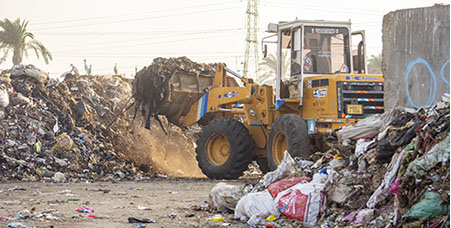
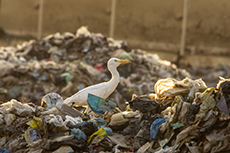
Landfills leak methane and leachate, closures push disposal costs up every year, and mass-burn incineration trades one emissions problem for another. The E3i BioRefinery® recovers what can be recycled and converts the rest into fuel and saleable co-products.
- Methane
- Landfill gas is a potent greenhouse gas and a site-safety hazard.
- Leachate
- Contaminated runoff migrates into aquifers and drinking water.
- Rising costs
- Closures mean longer hauls, higher tipping fees and monitoring that never ends.
Offtake
Three product lines from one waste stream
At the 1,000 ton-per-day reference design, every year of operation produces:
- Renewable diesel · Low-sulphur #2 (ULSD), ASTM D-975 and EN-590
- Biochar · Agricultural or industrial grade
- Wood vinegar · Organic insecticide
1,000 tons / day
Indicative linear scaling of the 1,000 ton-per-day reference design. Actual yields depend on feedstock composition and site design.
How it works
From the tipping floor to the fuel tank
Waste arrives mixed. It leaves as certified products. Each stage of the line has one job.
-
Receive and sort
An advanced material recovery facility sorts incoming waste with AI-assisted systems.
-
Recover
Every viable recyclable is pulled out and sold to local recyclers.
-
Condition and pelletize
The remaining fluff is dried, blended and pressed into 11,000 btu/lb pellets.
-
Pyrolysis
Pellets are heated without combustion, splitting into gas and biochar in a closed loop.
-
Upgrade
Gas is condensed and distilled into low-sulphur #2 renewable diesel; wood vinegar and water are recovered.
Risk & finance
Engineered to be financed
Infrastructure buyers ask the same question first: what happens if it underperforms? Our answer is written into the insurance.
Read the risk assessmentPerformance assurance
E3i BioRefinery®- Independent engineering studies
- 5
- Technology performance wrap
- 10 years
- Underwriters
- AON · Ariel RE · Lloyd’s of London
- Obligations met at
- 50% performance
- Research & development
- 12+ years · $12M+
- Trademark & provisional patent
- 2022
Projects
Where E3i is building
Government partners on three continents are already working with us.
-

Fayoum Governorate, Egypt
E3i to construct an E3i BioRefinery in Egypt
Egypt’s Minister of Environment, Dr. Yasmine Fouad, met with Energy3i representatives on a waste-to-biofuel project in Fayoum Governorate.
-
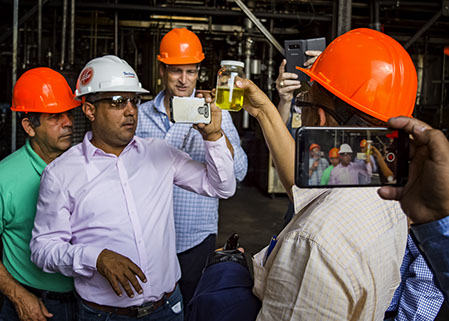
Dominican Republic
E3i partners with RPLN on the first waste-to-diesel plant in the Dominican Republic
The Dominican Government and Ridge Partners Linea Noroeste SA (RPLN) signed a definitive contract for a $290 million plant.
-
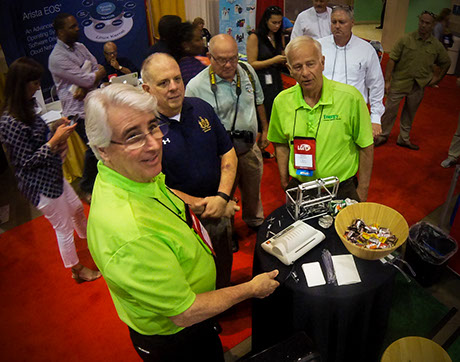
Ocean City, Maryland, USA
Maryland Governor visits the E3i booth
Governor Larry Hogan visited E3i at the Maryland Association of Counties conference.
Bring us your waste stream.
Tell us the tonnage, the site and the constraints. We will tell you what a BioRefinery could produce there.
Start the conversation